Showing posts with label risk. Show all posts

Football and a freak fall: Manitoba judge eyes new rules for stadiums

STEVE LAMBERT
Canadian Press

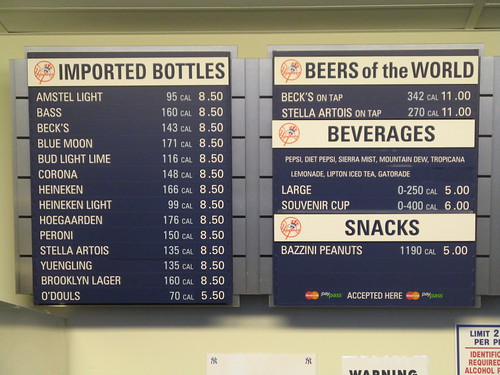
Should sports stadiums be required to curb beer sales and improve safety features to protect fans in the stands?

Those are two of the questions being considered by a Manitoba judge following a wide-ranging inquest into the death of a spectator at a Canadian Football League game in Winnipeg in August 2006. The inquest concluded Friday after hearing from 50 witnesses over the last 15 months.

A lawyer for the CFL and the Winnipeg Blue Bombers argued Andrew Szabo’s deadly fall from the north-end stands at Canad Inns Stadium was a freak accident that neither a booze ban nor safety upgrades could have prevented.

“There have been millions of people there ... going up and down those stairs,” Bob Sokalski said. “[Mr. Szabo’s fall] was a unique, extraordinary event that was not readily foreseeable.”

Mr. Szabo, 52, was a chronic alcoholic, his widow, Barbara, testified at the start of the inquest last year. But he didn’t appear drunk the day the couple and a friend went to see the Bombers play, she said.
Mr. Szabo stumbled and fell down a flight of stairs near the start of the game, tumbled through a guardrail at the bottom and crashed onto the concrete several metres below. He died several hours later in hospital from internal bleeding and a broken pelvis that went undetected, according to Manitoba's chief medical examiner, Dr. Thambirajah Balanchandra.

The inquest was told Mr. Szabo’s blood-alcohol level, taken five hours after the fall, was more than double the legal driving limit — enough to indicate that he had consumed roughly 12 beers or the equivalent in hard liquor.

Most of the booze had been consumed at home. He drank two beers at the stadium prior to game time and had just purchased another two when he fell.

The inquest heard from people sitting near Mr. Szabo as well as security staff who remembered seeing the tall, lanky man. By all accounts, he did not appear to be intoxicated.

Medical experts testified that chronic alcoholics build up tolerance and learn how to avoid showing symptoms of drunkenness such as slurring their speech or losing their balance.

Still, provincial court Judge Mary Kate Harvie asked lawyers for all sides to comment on whether the Bombers should impose further restrictions on beer sales, which are currently limited to two cups per person at any one time.

Mr. Sokalski rejected the idea. He said Mr. Szabo had hardly consumed any alcohol at the stadium. He also said beer-sellers at such events are trained to look for impaired people and can refuse to serve them.

“And no one, including his wife, observed him to show visible signs of impairment.”

The inquest also considered how safe the north-end stands, which were built in 1966, really are. The guardrails have large openings of up to 53 centimetres — too big according to current building codes. But the space, noticeably wider than the average economy-class airplane seat, was perfectly acceptable when the stadium was built.

Judge Harvie has indicated she may recommend that stadiums and other public facilities be required to renovate every 20 years or so to meet new building codes. That would make building codes retroactive for the first time.

“I think that what we have heard evidence about is some public-use facilities — outdoor facilities that might be subject to the weather — and is there some room for consideration of some type of retroactivity?” she asked earlier in the week.

Mr. Sokalski said the move would be heavy-handed, because changes to building codes govern everything from staircases to seat sizes.

“Does that mean that you would have to tear the stadium apart [to make upgrades]? I think it does,” he said.

The inquest also focused on the health care Mr. Szabo received. Paramedics took him to Winnipeg’s Grace community hospital instead of the major trauma unit at the Health Sciences Centre. Barbara Szabo testified doctors at the Grace said her husband was doing fine and had no broken bones.
Hours later, his blood pressure plummeted and he was rushed to the Health Sciences Centre, where he died. Doctors there discovered a broken pelvis and internal bleeding.

Mr. Szabo’s widow has filed a lawsuit against the Grace hospital and the Winnipeg Regional Health Authority. The hospital’s lawyer, Bill Olson, has said the fracture was too small to appear on X-rays. He also said the Grace did not have advanced equipment at the time that could have detected the internal bleeding.

The judge is expected to issue her findings in the first half of 2011.

More skiers wearing helmets - Crabbe manager

Helmet use among skiers and snowboarders is growing, according to officials.
"I think they're a great idea," said Jason Crawford, the manager of Crabbe Mountain.
"That's one of the biggest things we work on from a safety point of view is encouraging the use of helmets. They're warm, they're comfortable and, probably most importantly, they protect you in the chance of an accident."
The latest issue of the Canadian Medical Association Journal includes a study on brain injuries. Researchers concluded that skiers and snowboarders wearing a helmet were significantly less likely than those without a helmet to suffer a head injury.
In addition, a University of Calgary study released this week showed that wearing a helmet reduces the risk of a head injury by 35 per cent.
In 2005-06, 138 people were hospitalized in Canada due to a head injury sustained while skiing or snowboarding, according to statistics from the Canadian Institute for Health Information. That figure does not include hospitalizations in Quebec.
Crawford, a skier, snowboarder and telemarker, said helmet use is growing from year to year.
"We did a poll last year and we had about 60 per cent of the general public that were wearing helmets. I anticipate that number's higher this year," he said.
"They're very cool now. They look nicer, they're aesthetically pleasing. Before they were just round, boring and ugly and now they're really cool to wear. A lot of people now have warmed up to the idea."
Bill Anderson, general manager of Poley Mountain in Sussex, also estimated that more than half of the people on the hill don protective headgear.
"Twenty years ago, there was probably none," he said.
"Ten years ago, there was an odd one but they looked kind of funny. Now they look kind of funny if they don't have one on."
Anderson said he always wears a helmet while skiing and that it's required for the mountain's ski patrol and instructors while they're on the slopes.
The potential danger of head injuries received national attention last March, when British actress Natasha Richardson died after she fell and struck her head while skiing at Mont Tremblant resort in Quebec.

Fatal accident highlights snowmobiling risks


Published Tuesday January 12th, 2010
By MICHAEL STAPLES
staples.michael@dailygleaner.com

A fatal weekend snowmobile accident near Miramichi is an unfortunate reminder of the importance of staying on trails, says the general manager of the New Brunswick Federation of Snowmobile Clubs Inc.
Ross Antworth said snowmobiling not only comes with a great amount of fun, but also with a lot of risk.
“If you ride off-trail, you should be prepared that, some day, you are going to have a serious accident,” he said.
Antworth’s comments follow the snowmobile death Saturday of a teenager.
District 6 RCMP were called at around 6 p.m. after a report of a collision in an open field near the Pipeline snowmobile trail in Williamstown. A father and son from Lower Derby were on their snowmobiles when they collided with a wire fence.
Paramedics transported the pair to hospital, where 16-year-old Devon O’Donnell was later pronounced dead.
The father suffered serious injuries but they aren’t believed to be life-threatening, said the RCMP.
An investigation into the incident is ongoing.
Antworth said snowmobile fatalities and accidents are due to three causes: not riding on the trail systems, alcohol and speed.
The federation general manager said when it comes to travelling offtrail, there’s not a lot of safety advice that can be offered.
“There is really nothing we can do in that regard when people make that poor decision,” Antworth said. “We are going to continue to impress upon people that riding on open designated trails is the best thing they can do to reduce the risk and improve their chances of coming home.”
Antworth said a property owner shouldn’t be blamed when an accident occurs.
“We cannot, should not, will not blame property owners. Individuals who have control of the snowmobile and or passengers on a snowmobile have to take all the responsibility.
People have designated trails that are prepared for them. They have an opportunity to run on a wonderful system in New Brunswick and they should use that system,” he said.
Antworth said snowmobilers should follow the rules of the Safe Riders! You make snowmobiling safe program.
It accents things such as not drinking and driving, knowing ice conditions, riding safely and respecting private property.
In the meantime, a 46-year-old Bathurst man has pleaded guilty to three counts of obstruction following an RCMP investigation into a fatal snowmobile crash in 2008.
Ross Veniot was fined $3,450 and placed on 12 months probation. He must also abstain from consuming alcohol or drugs and was suspended from operating a snowmobile for one year.
On Feb. 22, 2008, Veniot was operating his snowmobile on a managed trail near Popple Depot, approximately 70 kilometres west of Bathurst.
His wife Francine Pitre was a passenger on the snowmobile, which left the trail and struck a tree.
Pitre died as a result of her injuries, but Veniot was not injured in the collision.
Alcohol was determined to have been a factor in the collision, said the RCMP.
Veniot pleaded guilty to the charges of interfering with a police investigation by lying about his consumption of alcohol before and after the collision.